
The AI reads, drafts, and double-checks. You sign off.
Klerum's AI extracts the credit file, drafts the memo with cited evidence, and runs an independent peer review on the rating. A senior reviewer approves before anything is issued, and every change lands in the audit trail.
It reads the file, and it shows its work.
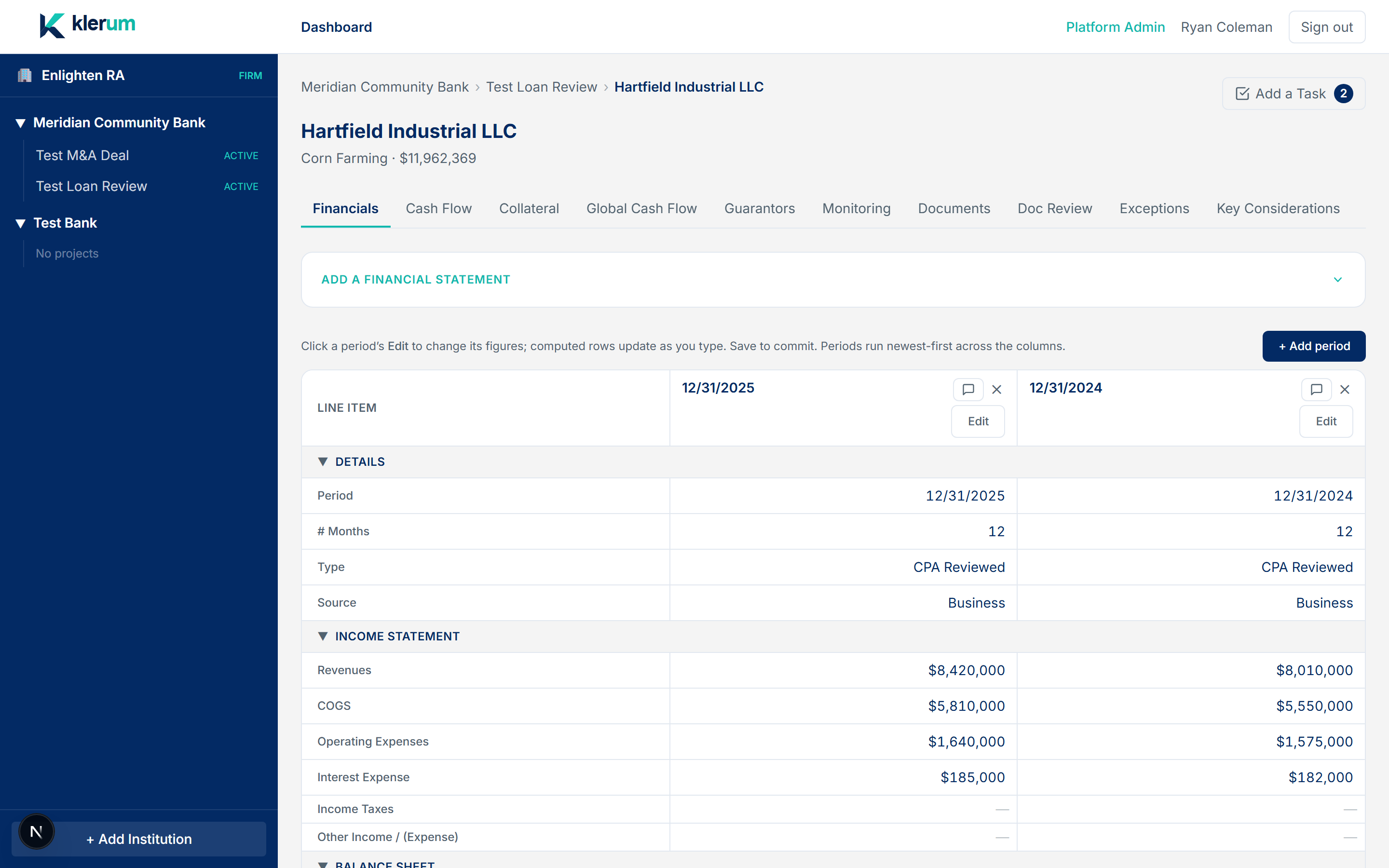
Point the AI at the documents on a relationship and it spreads what a reviewer needs from each one — structured, dated, and ready to check against the source.
- Credit presentations: approval terms, DSCR, LTV, repayment sources, weaknesses, related entities, and covenants
- Financial statements and tax returns: income statement and balance sheet, period by period
- Personal financial statements: guarantor assets, liquidity, liabilities, and net worth
- Collateral valuations: type, as-is value, valuation date and type, and appraiser
- Every extracted figure is a starting point a reviewer confirms — the DSCR and LTV math is computed, not generated

A drafted memo you revise by talking.
The AI drafts the review memo from the work already done in the relationship. Tell it to tighten a paragraph, lead with the collateral shortfall, or add a note on the maturity wall, and it revises. A senior reviewer approves before the final memo is issued, and the audit trail captures every change.
The documents that should exist, checked against the file.
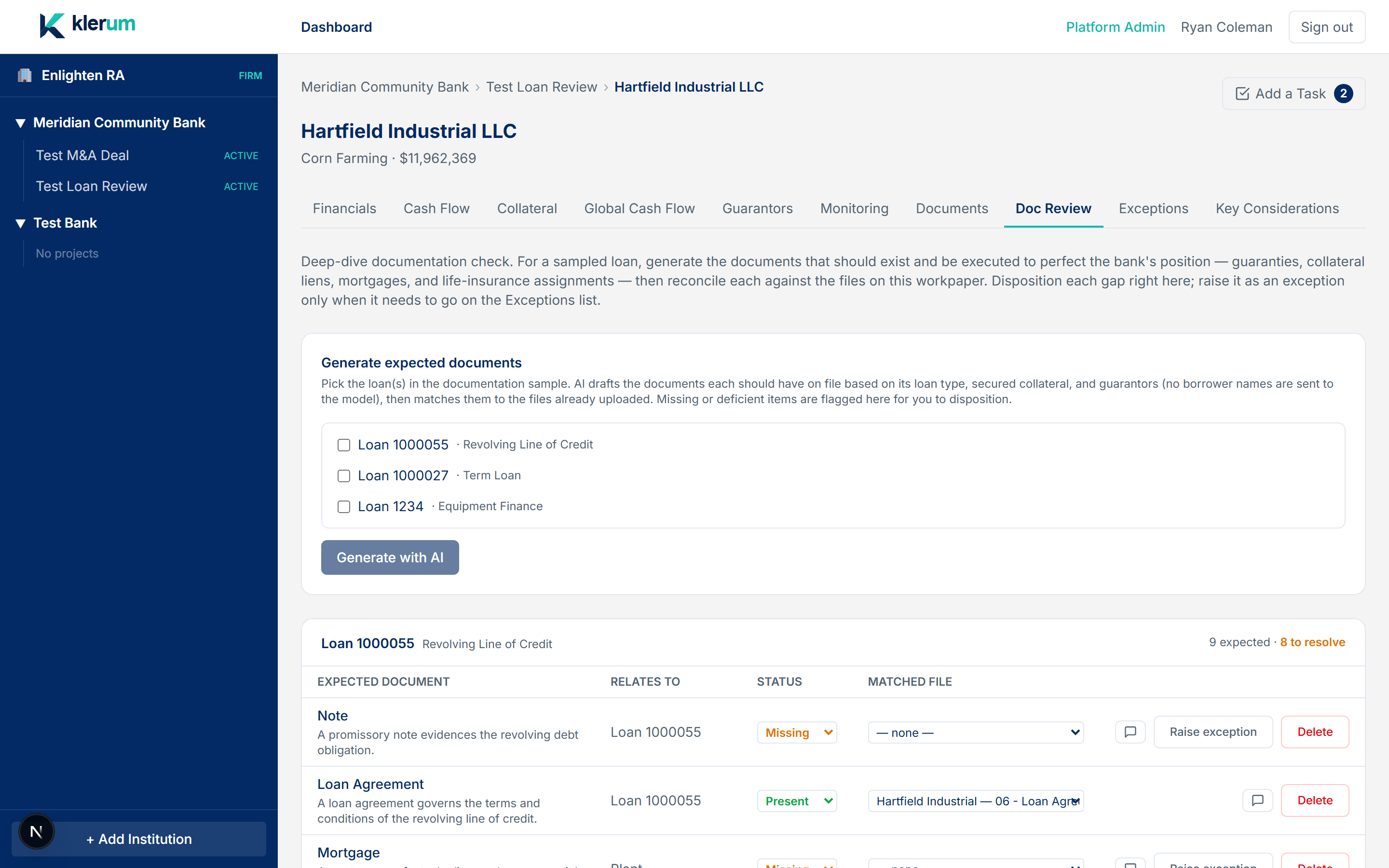
For a sampled loan, the AI drafts the documents that should be on file to perfect the bank's position — notes, guaranties, mortgages, UCC filings, life-insurance assignments — based on its loan type, collateral, and guarantors. It then reconciles each against the files already uploaded and flags what is missing.
- Expected-document checklist drafted per loan, no borrower names sent to the model
- Each item matched to an uploaded file, or marked missing
- Loan-policy standards extracted and tested against collateral advance rates
- Gaps promoted to the exception list in one click
A second set of eyes, then a clean workflow to closure.
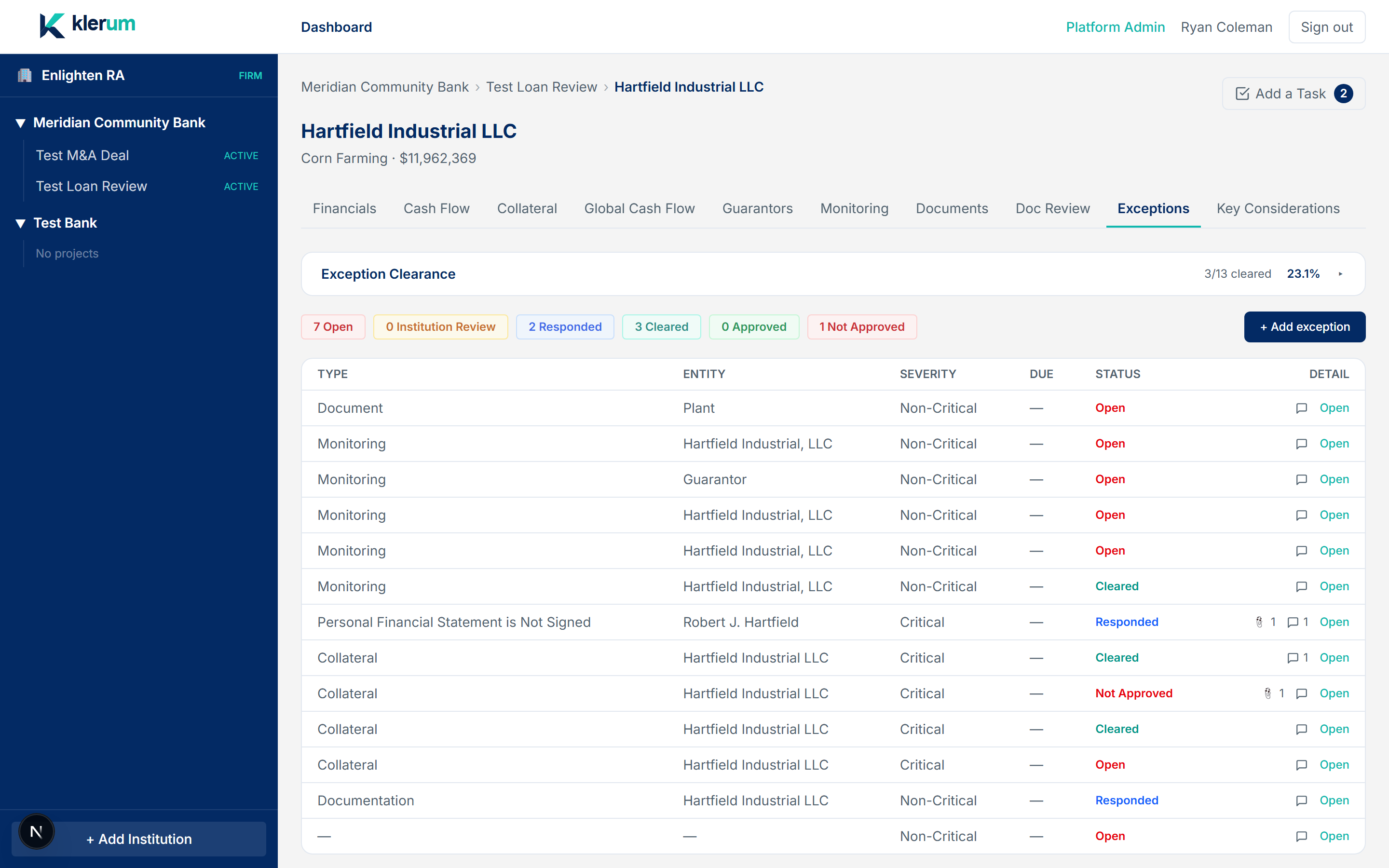
An independent AI peer review challenges the primary rating and flags inconsistencies: rating drift across facilities, stale documents, unsupported claims. It never overrides a human; it makes the review sharper. Every finding and exception it raises then runs a real workflow.
- Severity and status on every exception: open, institution review, responded, cleared, approved
- A firm-configurable exception catalog, sent to the institution for response
- AI-raised and rule-based exceptions side by side: stale documents, covenant breaches, DSCR and LTV thresholds
See Klerum on your own portfolio.
A 30-minute demo, no deck. Upload a sample trial and watch the AI propose a review population against your methodology.